
How to Price a New Product Without Underselling Yourself
Refining IdeasSeptember 27, 2026
Get one honest marketing lesson a week
One short email. What actually works, what wastes your money, and why. No hype, unsubscribe anytime.
Charlie Page, Common Sense Digital Marketing, 1511 South Texas Ave Ste 326, College Station, TX 77840
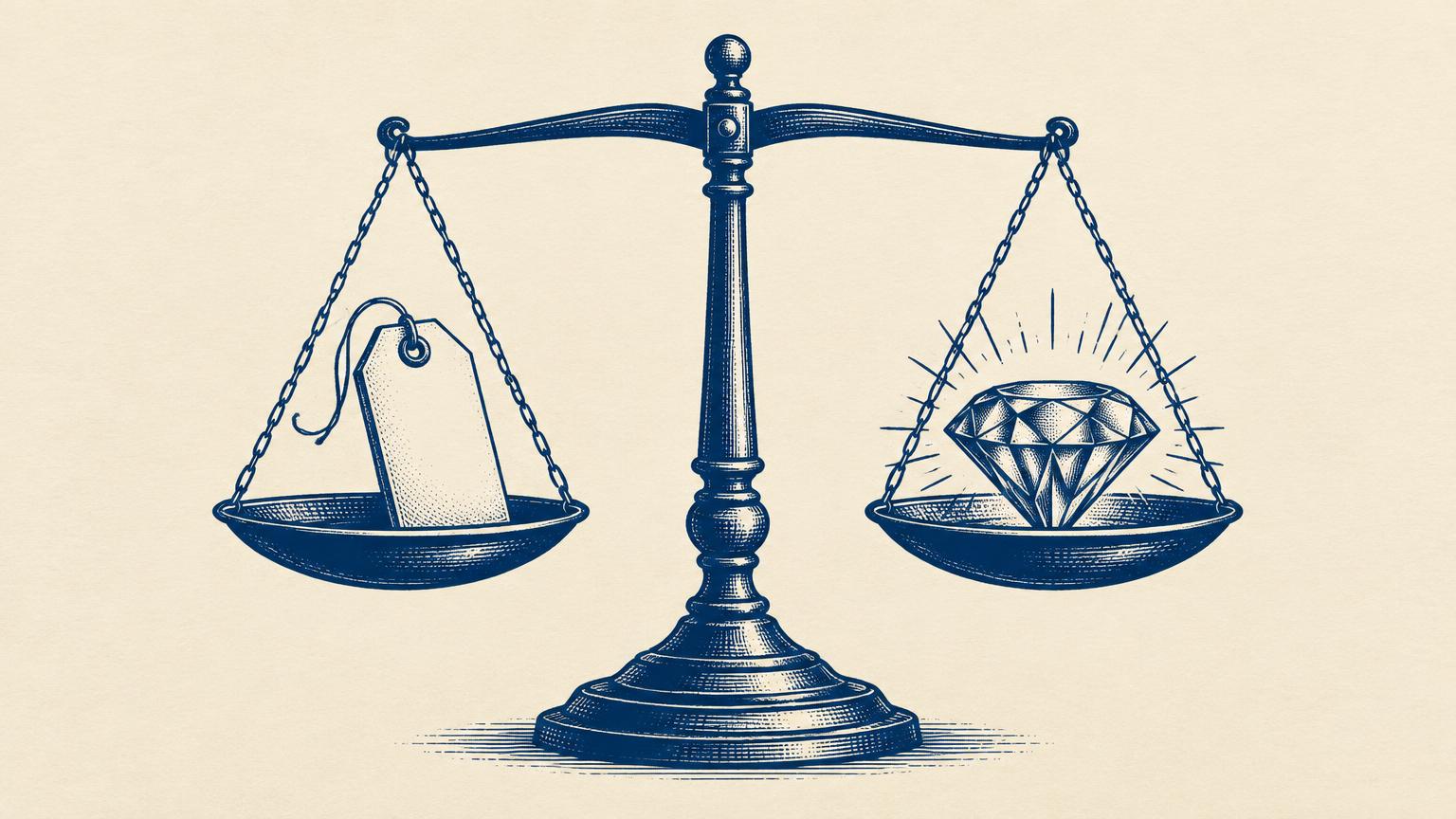
To price a new product, start with the value of the result to your customer and the cost of reaching them, not with what feels comfortable. Your price has to be low enough to be worth it to the buyer and high enough to pay for finding the next one. Most first prices fail the second test.
The first product I ever sold was priced at a number I picked because it seemed polite. It sold reasonably well. It also lost money on nearly every sale once I counted the time and ads it took to find each buyer.
I didn't have a pricing problem. I had a math problem I'd never written down. This post walks through how to price a new product so the math works from the first sale.
Why do most founders price too low?
Fear. A low price feels like protection against rejection. If it's cheap, surely people will buy. But customers rarely decide based on a few dollars. They decide based on whether they believe the result is worth it.
Low prices also send a signal. In many markets, cheap reads as unproven or low quality. A buyer with a serious problem often trusts the more expensive option more, because it suggests the seller takes the problem seriously too.
The real danger is what low prices do to your business. They leave no room to pay for marketing, support, or your own time. Every sale feels like progress while the business quietly drains.
How do you figure out what your product is worth?
Look at what the problem costs your customer today. Lost hours, lost sales, hired help, a competing product, stress. If your offer saves a business owner five hours a week, and their hour is worth fifty dollars, the value is clear.
Then look at the alternatives. What do people currently pay to solve this, including doing nothing? Your price lives somewhere between the cost of the cheapest workaround and the value of the result. That range is usually wider than founders expect.
Ask customers directly what they've spent on the problem in the past. Not what they'd pay in theory, but what they actually paid. Past spending is the most honest pricing data you'll find.
What does your price need to cover?
Your price must cover the cost of making or delivering the product, the cost of acquiring the customer, and some profit. If it can't cover all three, volume won't save you. It will just make the losses bigger.
Customer acquisition is the line most people forget. If it takes fifty dollars of ads or a few hours of outreach to land one buyer, a twenty dollar product is in trouble unless people buy again and again.
Write these numbers down, even as rough guesses. Delivery cost, acquisition cost, and the price. If the math only works under perfect conditions, the price is too low or the channel is too expensive.
Should you charge once or charge monthly?
Charge in the way the value arrives. If the customer gets a result once, like a finished logo or a plan, a one-time price makes sense. If they get value every month, a subscription fits.
Subscriptions are attractive because they compound, but they're harder to sell and harder to keep. If customers don't feel ongoing value, they cancel, and you've spent money acquiring someone who left after two payments.
Many good businesses start with a one-time offer and add ongoing options later. You learn what customers value before asking them to commit every month.
How can you test a price before launch?
Show the price and ask for money. Pre-orders, deposits, or paid pilots tell you more than any survey. If a meaningful share of qualified prospects pay, your price is in range.
Try different prices with different groups if you can. Offer one group a higher number and another a lower one. You'll often find the higher price converts nearly as well, which means it was the right price all along.
Pay attention to the objections. “Too expensive” often means “I don't believe it works yet.” That's a trust problem, not a price problem, and dropping the price rarely fixes it.
When should you raise your price?
When nearly everyone says yes without hesitation, you're probably too cheap. A healthy price gets some pushback. If nobody blinks, the market is telling you the result is worth more.
Raise prices for new customers first and keep early buyers at their original rate for a while. That rewards loyalty and lets you test the new number without upsetting anyone.
Every price increase is a small experiment. Watch conversion and refunds. If both hold steady, you've just made your business healthier without adding a single customer.
Pricing isn't a guess you make once. It's a number you test, defend, and adjust as you learn. Start from value, check the math, and say the number out loud to real buyers.
If you're unsure whether your price holds up, pressure test your idea free and see how the money score comes back. Pair it with how to validate a business idea, and compare versions in My Tests.
Frequently asked questions
Get one honest marketing lesson a week
One short email. What actually works, what wastes your money, and why. No hype, unsubscribe anytime.
Charlie Page, Common Sense Digital Marketing, 1511 South Texas Ave Ste 326, College Station, TX 77840