
How to Validate a Business Idea Without Spending Any Money
Evaluating IdeasSeptember 29, 2026
Get one honest marketing lesson a week
One short email. What actually works, what wastes your money, and why. No hype, unsubscribe anytime.
Charlie Page, Common Sense Digital Marketing, 1511 South Texas Ave Ste 326, College Station, TX 77840
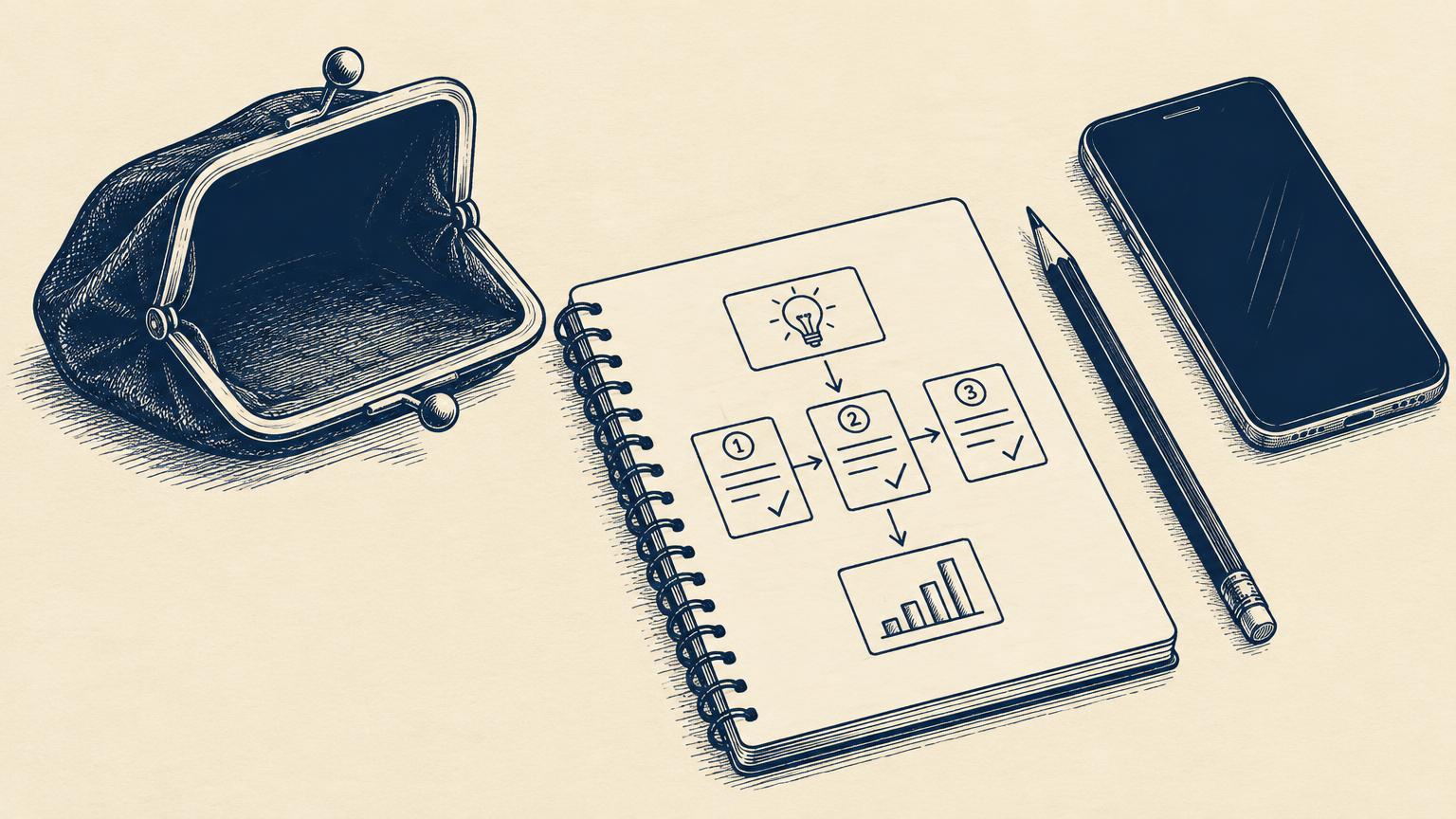
You can validate a business idea without money by trading time for evidence: find your customers where they already gather, study their complaints, have honest conversations, and ask for a pre-order before anything is built. None of that costs a dollar. It costs attention and a little courage.
When I started out I had more ideas than cash. I assumed that meant I couldn't test anything properly. So I either did nothing or spent money I didn't have on things I didn't need yet. Both were mistakes.
What I eventually figured out is that the most valuable validation is free. Money speeds up building. It doesn't speed up learning. This post shows how to validate a business idea with zero budget, step by step.
Why doesn't validation need a budget?
Because validation is about learning, and learning comes from people, not purchases. You need to find out whether strangers have the problem and will pay to solve it. Talking to them is free. Reading what they write is free.
Spending money early often hides the truth. A slick website or a paid ad campaign can create a burst of activity that looks like demand. Without the polish, you see the real level of interest much more clearly.
There's a discipline benefit too. When you can't throw money at a problem, you're forced to think. You pick the cheapest test that answers the biggest question. That habit will serve you for as long as you're in business.
Where can you find customers for free?
Wherever they already talk about the problem. Reddit communities, Facebook groups, LinkedIn, Discord servers, niche forums, local clubs, trade association boards. Your customer is complaining somewhere right now. Go find it.
Start by listening. Spend an evening reading posts and saving the exact phrases people use. Note how often the problem shows up, how upset people are, and what solutions others recommend. This alone can kill a weak idea in a few hours.
Then participate. Answer questions, share what you know, be useful. Once people recognize you as helpful, asking for a quick conversation feels natural instead of spammy.
How do you run customer conversations without paying for research?
Message people directly and ask for fifteen minutes. Be honest: you're exploring a problem and want to understand how they handle it. You're not selling. A surprising number will say yes, especially if you've been helpful in their community.
In the conversation, ask about the last time they faced the problem, what they tried, what it cost, and what frustrated them. Listen far more than you talk. Take notes on exact words, because those become your marketing later.
Five to ten conversations is usually enough to see patterns. If everyone describes the problem differently or nobody seems bothered, that's a strong signal. If the same pain keeps showing up, you're onto something.
Can you test pricing without a product?
Yes, and you should. Describe the offer in a short document or a free landing page, state the price clearly, and ask people to pre-order or put down a small deposit. Free payment link tools let you collect money without building anything.
Promise a full refund if you don't deliver. That makes the ask fair and lowers the risk for early buyers. What you learn from whether they pay is worth far more than the money itself.
If no one pays, try a narrower customer, a sharper promise, or a different price, and ask again. Each round costs you nothing but a little time. Each answer saves you from building the wrong thing.
What about a manual version of the product?
Deliver the result by hand before you automate it. If you're planning software that schedules appointments, schedule them yourself in a spreadsheet for your first customers. If you're planning a course, teach it live over a free video call.
Manual delivery shows you what customers really value, what they ignore, and what goes wrong. You'll learn more in a month of doing it by hand than in six months of building features you guessed at.
It also proves willingness to pay. If people will pay for the clunky manual version, they'll pay for the polished one. If they won't pay for the result done by hand, better software won't save it.
When does it make sense to start spending?
Spend when money speeds up something that's already working. Once strangers are paying and a channel is producing customers, spending to do more of it makes sense. Before that, money mostly buys you a more expensive way to find out.
A good rule is to spend only to remove a bottleneck you can clearly name. “I'm turning away customers because delivery takes too long” justifies a tool. “I think a nicer website will help” usually doesn't.
Keep the free habits even after you have a budget. The best operators I know still read customer complaints and still talk to buyers every week. Those are the cheapest insights in business, at any size.
Not having money is not a reason to skip validation. It's a reason to do it well. The tests that matter most are free, and they'll tell you more than any budget could buy at this stage.
Start with a free gut check: pressure test your idea here. Then read why you should stop asking friends for feedback, and log each revision in My Tests as your evidence grows.
Frequently asked questions
Get one honest marketing lesson a week
One short email. What actually works, what wastes your money, and why. No hype, unsubscribe anytime.
Charlie Page, Common Sense Digital Marketing, 1511 South Texas Ave Ste 326, College Station, TX 77840