
How to Refine an Offer Until People Actually Buy It
Refining IdeasSeptember 12, 2026
The Charlie Page Letter
26 years of experience and common sense delivered to your inbox.
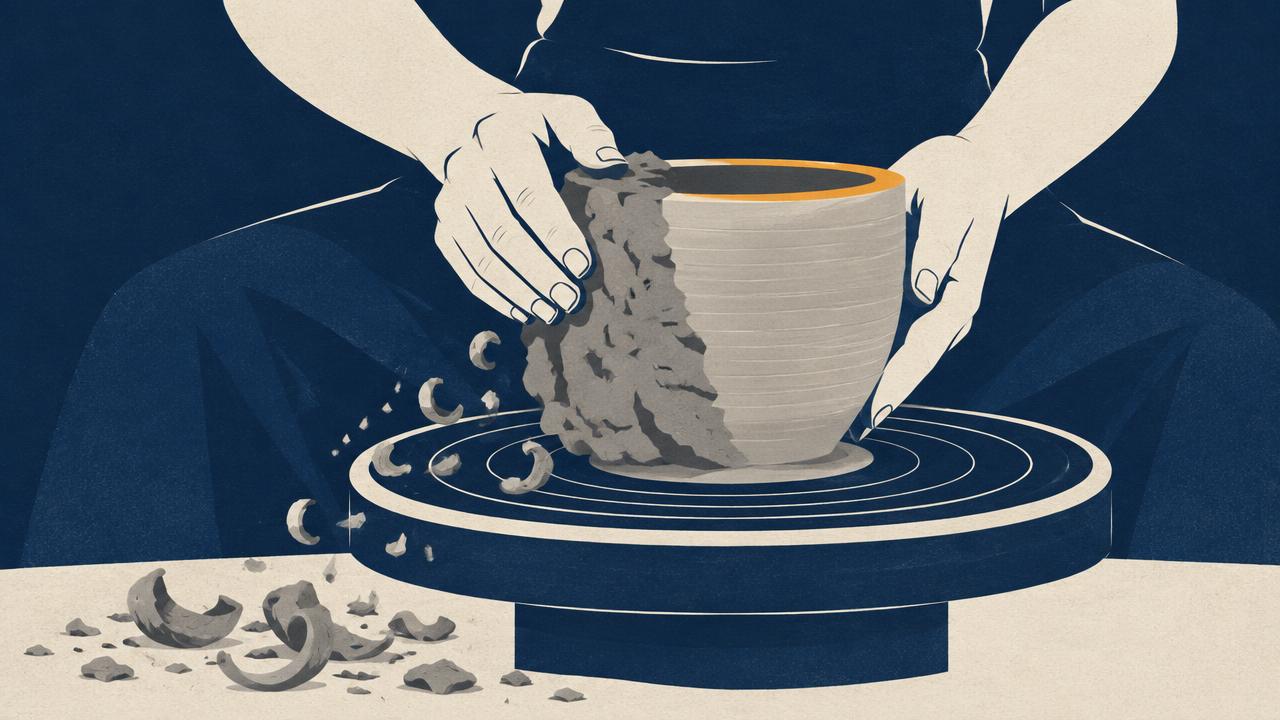
Refining an offer means removing everything that isn't the reason someone buys. Most weak offers aren't missing features, they're carrying extra weight: too many promises, too many options, and a description that sounds like the maker rather than the buyer.
I've watched this happen to my own work. The version that sold was never the most ambitious one. It was the one where I'd cut the interesting extras, named one person, promised one outcome, and stopped explaining how it worked.
The good news is that refining is a series of small mechanical passes rather than inspiration. Each pass asks one question of the offer and removes what fails. Do them in order and a muddy offer turns into a legible one in an afternoon.
What does the buyer actually get?
Say the outcome in one sentence, without naming the mechanism. Not "a dashboard that tracks referrals" but "you know where this month's clients came from by the first of the month". If the sentence contains the word platform, portal, or system, start again.
The test is whether a tired stranger would recognise the improvement in their own week. Outcomes are concrete and slightly boring, which is exactly why they sell. Beautiful abstractions don't correspond to anything the buyer can picture.
Write the sentence and put it at the top of everything you do. If the rest of the offer doesn't serve it, the rest of the offer is decoration.
Who is it for, in one line?
Name the person the outcome is obviously for. A buyer who sees themselves in the line stops asking whether it's relevant and starts asking how it works. A buyer who doesn't see themselves leaves, and that's a good outcome rather than a lost sale.
Narrowing feels like throwing away money and usually does the opposite, because a tight description lets you be specific about the problem, and specificity is the only thing that reads as trustworthy.
If you can't name the person without qualifying it with "and also", you haven't refined the offer, you've hedged it.
What proof do you have?
One example, one number, or one honest admission. A before-and-after, a result from a real customer, a screenshot of the thing working, or a plain statement of what you can't do. Proof is what separates an offer from a claim.
Admissions are underrated. "This doesn't help if you have no clients at all" costs you nothing and buys credibility for everything else you say. Every offer that promises too much reads like the others in the room.
If you have no proof yet, that's the offer's real weakness, and the fix is a customer rather than better copy. Do the work twice for two people and you'll have something to say instead of something to assert.
What should it cost?
Price against the alternative, not against your effort. The buyer's real comparison is the contractor, the spreadsheet, the wasted hours, or the thing they already pay for. A price that's obviously smaller than the problem is easy to say and easy to accept.
Then decide the structure: one price, one thing, no menu. Options are where decisions go to stall. You can add tiers after people start asking for them, and they'll tell you which tier was worth building.
If saying the number feels uncomfortable, that's usually information about the offer rather than about the buyer's generosity. Find out which, before you lower it.
Who carries the risk?
Right now, the buyer does, and that's what makes people hesitate. Move some of it back: a first-week review, a refund that doesn't require a fight, a small starting price with the option to continue. Risk transfer is the cheapest conversion tool available.
Keep the guarantee honest and short. A long list of conditions reads as a trap, and a promise you'd resent having to honour is a promise you shouldn't make.
The other half of risk is competence risk: will this person actually do it. A named process, a clear first step, and a real example reduce that better than any badge.
What can you remove?
Run the removal test on every element: if this disappeared tomorrow, would anyone notice? The answer to that question is usually no, and the element is just your own preference being charged to the buyer.
Remove the second outcome first, then the optional extras, then the explanation of how it works. Most offers survive that pass looking sharper and converting better, because attention that was split is now pointed at the one promise.
Finally, have something with no stake in your feelings look at it. A free pressure test will tell you which part of the offer is decoration and which part is critical, and the answer is rarely the part you were worried about. Refine it and keep the new version in My Tests.
Refining is subtraction. The offer that works is the one where nothing is left that isn't the reason someone buys, and getting there means being willing to throw away the parts you like best.
Try your offer on the free pressure test and see what a hostile reader would cut. Then read would you buy this from a stranger for the test that finishes the job.
Frequently asked questions
The Charlie Page Letter
26 years of experience and common sense delivered to your inbox.