
Would You Buy This From a Stranger? The Offer Test That Saves Months
Refining IdeasSeptember 10, 2026
The Charlie Page Letter
26 years of experience and common sense delivered to your inbox.
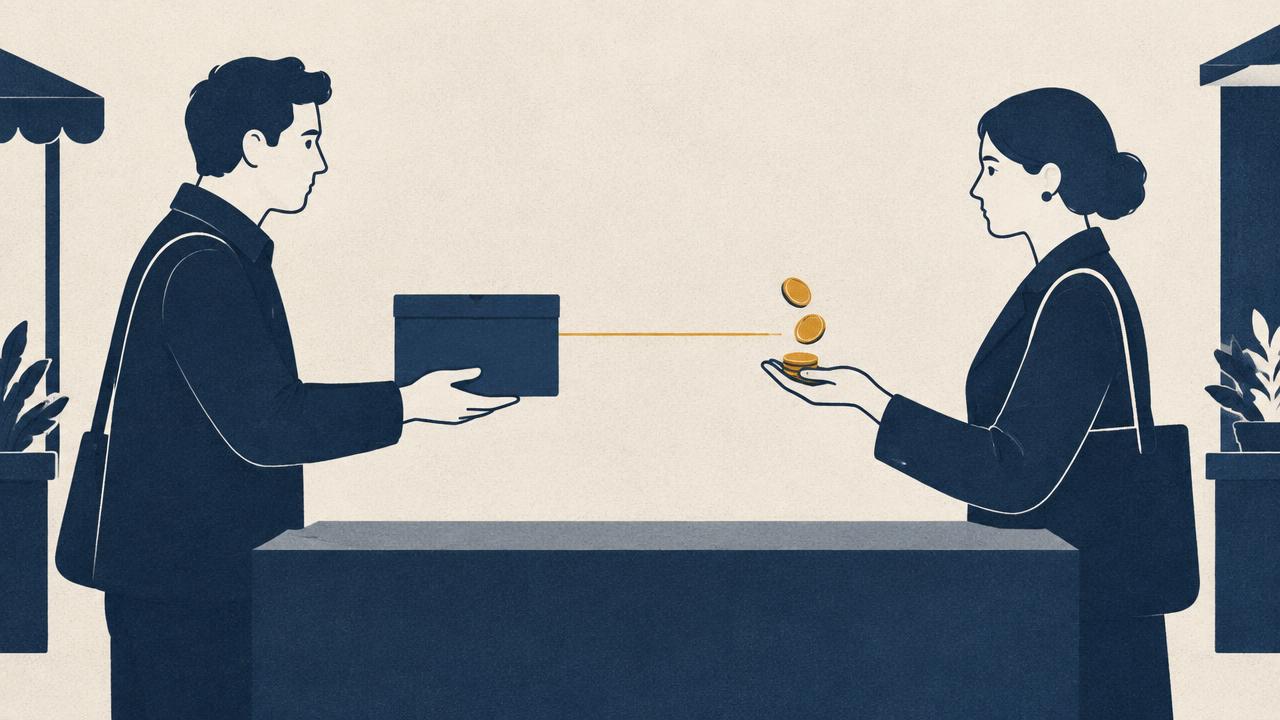
The test is this: would you hand a stranger your money for your own offer, knowing nothing about the person selling it except what's on the page? Not because you're the founder, not because you believe in it, but as a customer with a problem and a limited budget.
It's the most useful single question in early-stage evaluation because it strips out every advantage you have. You know the roadmap, you know how hard the work was, you know the story. A stranger knows one sentence and a price, and that's what has to do the selling.
I've used it on my own offers and it has embarrassed me more than once. The version I was proudest of was the one I'd least want to buy from a stranger, and that gap turned out to be the whole diagnosis.
Why does the stranger test work so well?
Because it removes affection. Your friends want you to succeed, your family doesn't read carefully, and your colleagues are being polite. A stranger has no interest in your feelings and will absolutely leave, which is the only honest behaviour available to a buyer.
It also exposes the trust gap that founders can't see. You know your work is good. A stranger knows nothing, so every vague promise, every missing example, and every hedged claim reads as risk rather than as modesty.
And it forces the question that matters most: is there a reason to buy this now? You have infinite reasons, since you've been carrying the idea for months. A stranger has one bad week and a choice.
How do I run it properly?
Write your offer as a stranger would encounter it: one sentence about the outcome, one line about who it's for, the price, and what happens next. Then read it as someone with no context and ask the honest question at the top of this post.
Be strict about it. If the answer is "I'd wait to see if it's real", the answer is no. If it's "I'd need to talk to someone first", that's also a no, since a stranger has no reason to book a call.
Then show the same page to one person who doesn't know you and ask what they'd want to check before paying. Their list is your to-do, and it will not be the list you expected.
What usually fails the test?
Descriptions of the mechanism instead of the outcome. Nobody has ever paid for a platform; they pay for the thing that stops happening on Monday morning. If the sentence explains how it works, a stranger has nothing to buy.
Prices that require an explanation. If the number needs a paragraph of justification, it isn't a price yet, and strangers don't read justifications. They compare against what they already spend and move on.
And the missing example. A stranger can't tell whether you've done this before, and their default assumption is that you haven't. One real example fixes more hesitation than any amount of careful wording.
What makes a stranger buy?
Recognition first. They read the who-line and think "that's my week". Everything else is secondary, and no offer that fails recognition will be rescued by a guarantee.
Then a small, reversible step. A low first price, a short engagement, a refund that doesn't require a fight. Strangers don't take big swings; they take the smallest step that gets them an answer.
Finally, evidence that someone else already took it. A name, a number, a screenshot, a plain description of what happened. You don't need a wall of testimonials, you need one thing that proves the promise has been kept before.
What if I'd never buy my own offer?
Then find out why, and be precise about it. If it's the outcome, the idea is wrong. If it's the price, the offer is wrong. If it's the trust, you're missing proof. Those three diagnoses point in completely different directions and only one of them is fixed by better copy.
Very often the real reason is that the offer solves a problem the founder doesn't have. That isn't a dealbreaker, but it does mean you've been designing by imagination, and the fix is conversations rather than more features.
Or the honest answer may be that you wouldn't pay because you know how the sausage is made. That's the one failure mode to discount, and the only way to tell is to ask strangers what they'd want to see.
How do I use the result?
Fix the weakest link, not the loudest complaint. Most offers have one critical gap: no proof, no recognition, no reason to hurry. Fixing the second-weakest problem feels productive and changes nothing.
Then re-run the test with the change in place, and repeat until a stranger would genuinely take the first step. Two or three passes is normal, and each pass is cheaper than a week of building.
If you want the gap named for you rather than guessed at, a free pressure test reads the customer, the price, and the reach and tells you which one would make a stranger walk away. Keep each revised version in My Tests and watch the verdict move.
Would you pay a stranger for this? If not, find out exactly what would have to be true first, and go and build that instead of the next feature.
See what a hostile reader would say about your offer with the free pressure test, then read how to refine an offer for the passes that close the gap.
Frequently asked questions
The Charlie Page Letter
26 years of experience and common sense delivered to your inbox.